

It is at this point you see the one when you talk about a character which you have been picturing in your mind for so long, and that an AI just creates. Not perfect, but close enough that you involuntarily sink the jaw makeplush ai anime generator.
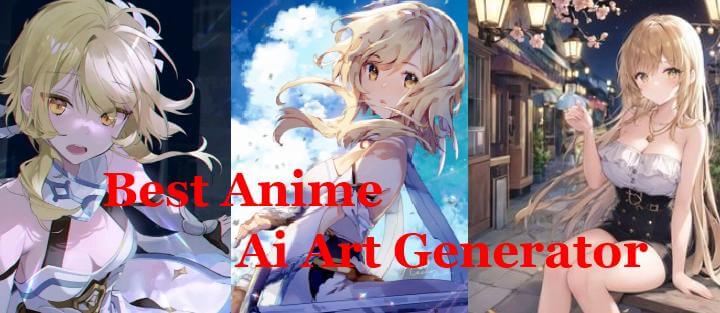
That's what AI anime generators do, and it is quite a large affair.
To be real. The majority of us aren't artists. We tried during the pandemic, drew pages of potato-shaped heads and gave up the dream. AI anime tools are the revenge arc which nobody thought would exist.
But how do these tools actually work?
The majority of AI anime generators are trained on diffusion-based models — in other words, the AI is trained by analyzing thousands of existing anime images to be trained to know what makes a face look that face, or what makes lighting feel like a Makoto Shinkai film. It is a horrifying level of pattern recognition.
Some go even deeper — such as NovelAI or Stable Diffusion specifically tuned for anime. You can get precise with your prompts: specify the art style, color palette, or even the expression on the face. Soft pastel, melancholy face, cherry blossoms falling — and away it goes.
There are those, like Adobe Firefly or Midjourney, with a broader artistic focus. They are not so specialized in anime per se, however, yet they can provide gorgeous anime-style outputs when guided well.
The prompt is everything. Seriously.
An "anime girl" can't just be typed into a box. It is simply equivalent to giving a chef a single item and asking them to produce a tasting menu. The people getting the best results are now treating prompts as a skilled craft — excessive lighting descriptions, referencing specific studios, detailing the thickness of the lines.
Full body, soft light, Studio Trigger, white school uniform, golden hour background, very detailed — that is a heavy load to bear prompt.
Reddit and Discord have tight-knit yet passionate community pockets swapping techniques with the same energy as rare card traders. They are maniacal and it is truly, watching them work is kind of inspiring.
What is this what people are using it for?
More than you'd think. Indie game devs are generating character concept art without hiring an artist to create every one of them. Webcomic creators are testing AI-based panel layouts and investing in it. Fans are generating images as visual references to the characters in their fanfiction — which is a phenomenon, and they're serious about it.
A designer I spoke with had been working on the same fantasy novel for six years. She could never quite visualize her protagonist fully. Then one afternoon, using an AI tool, and she finally saw her character. It broke two years of writer's block, she said.
That's not nothing. That's genuinely powerful.
Not cherry blossoms and glittering eyes all.
There's real ethical complexity here. The vast majority of such models have been trained on scraped images from sites like Danbooru or Pixiv — a place which artists posted their work long before realising that their art might train an algorithm.
Plenty of artists are upset. Fair or not, depending on your view. Some have even begun to use AI as a brainstorming partner when they finish the work by hand. The range of answers is broad.
Quality limitations still exist too. Hands. Feet. Complex backgrounds. AI still struggles with these — subtly or spectacularly. A six-fingered hand that is a hand, should be an elegant one, is not the impression you were making.
Where does it all go from here?
Fast. That's the honest answer. Character consistency — the reproduction of the same character in a sequence of pictures — has improved dramatically this year. These tools as Fooocus and Kohya training on the LoRA let you lock in a specific style and carry it through an entire sequence.
Video is the frontier. AI anime video clips are already out there. Rough, yes. Last year however they were nothing but motion-blur slide shows. Now? Occasionally you'd genuinely mistake one for a real indie studio clip.